注:本文已发布超过一年,请注意您所使用工具的相关版本是否适用
序
笔记
代码实现
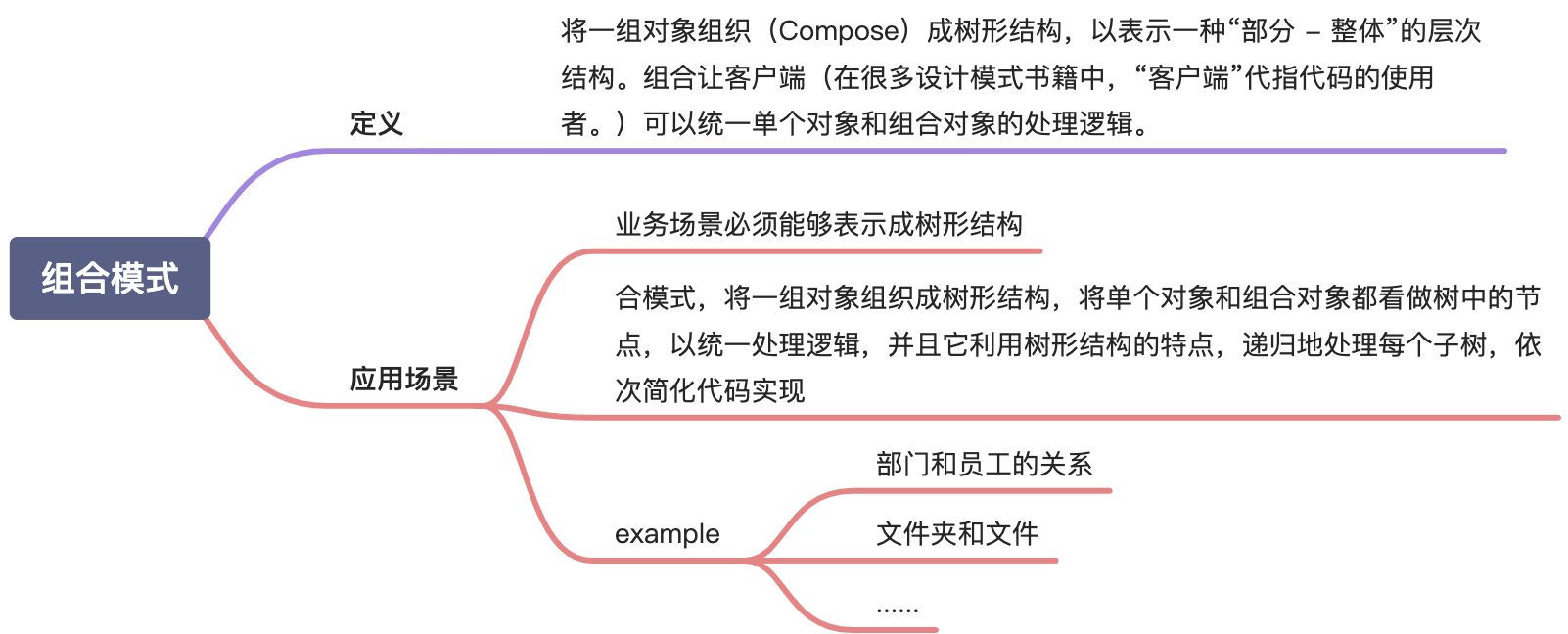
公司的人员组织就是一个典型的树状的结构,现在假设我们现在有部分,和员工,两种角色,一个部门下面可以存在子部门和员工,员工下面不能再包含其他节点。
我们现在要实现一个统计一个部门下员工数量的功能
Code
1
2
3
4
5
6
7
8
9
10
11
12
13
14
15
16
17
18
19
20
21
22
23
24
25
26
27
28
29
30
31
32
33
34
35
36
37
38
39
40
41
42
43
44
45
46
47
| package composite// IOrganization 组织接口,都实现统计人数的功能
type IOrganization interface {
Count() int
} // Employee 员工
type Employee struct {
Name string
} // Count 人数统计
func (Employee) Count() int {
return 1
} // Department 部门
type Department struct {
Name string SubOrganizations []IOrganization
} // Count 人数统计
func (d Department) Count() int {
c := 0
for _, org := range d.SubOrganizations {
c += org.Count()
}
return c
} // AddSub 添加子节点
func (d *Department) AddSub(org IOrganization) {
d.SubOrganizations = append(d.SubOrganizations, org)
} // NewOrganization 构建组织架构 demo
func NewOrganization() IOrganization {
root := &Department{Name: "root"}
for i := 0; i < 10; i++ {
root.AddSub(&Employee{})
root.AddSub(&Department{Name: "sub", SubOrganizations: []IOrganization{&Employee{}}})
}
return root
}
|
单元测试
1
2
3
4
5
6
7
8
9
10
11
12
| package compositeimport (
"testing" "github.com/stretchr/testify/assert"
) func TestNewOrganization(t *testing.T) {
got := NewOrganization().Count()
assert.Equal(t, 20, got)
}
|
关注我获取更新
猜你喜欢