注:本文已发布超过一年,请注意您所使用工具的相关版本是否适用
序
笔记
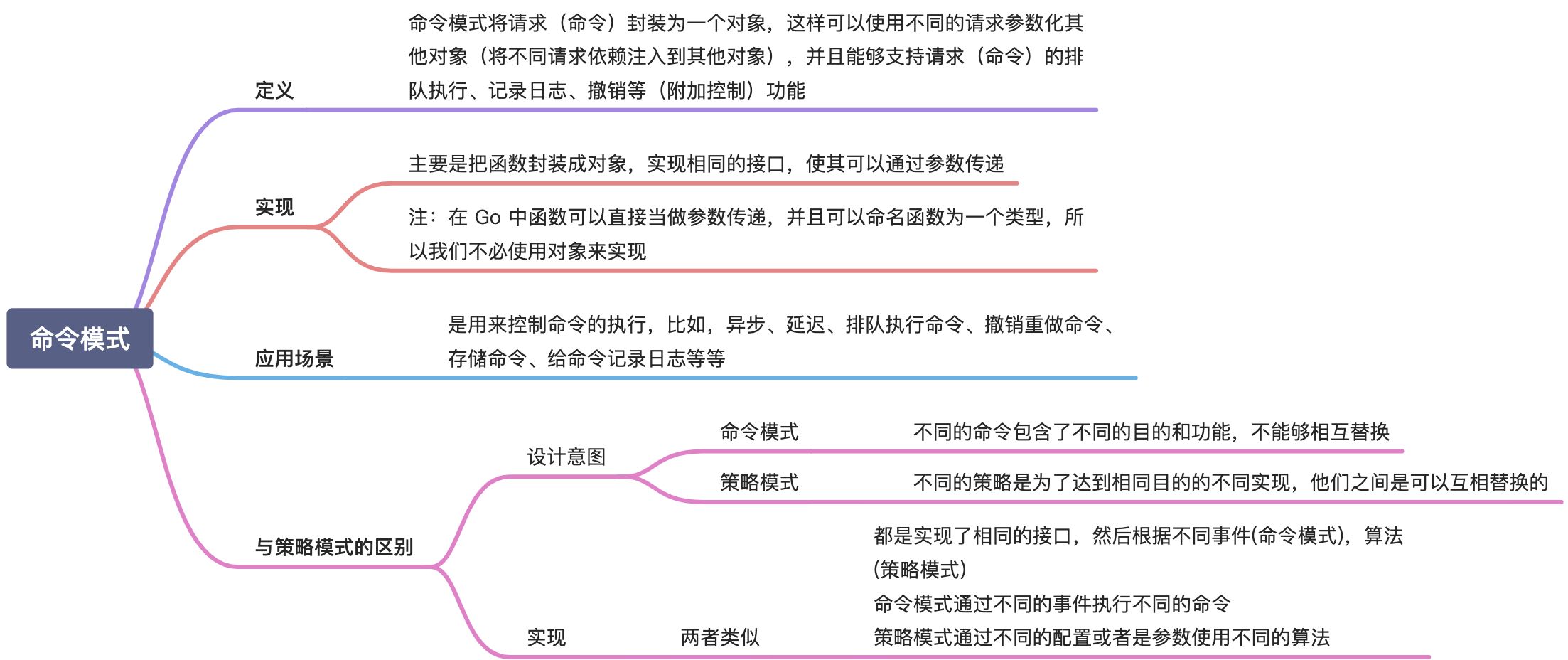
代码实现
接下来会有两个例子,第一个是按照原文定义的方式,将函数封装成对象,第二个例子我们直接将函数作为参数传递。
将函数封装为对象
Code
1
2
3
4
5
6
7
8
9
10
11
12
13
14
15
16
17
18
19
20
21
22
23
24
25
26
27
28
29
30
31
32
33
34
35
36
37
38
39
40
41
42
43
| // Package command 命令模式
// Blog: https://lailin.xyz/post/command.html
// 这是示例一,采用将函数封装为对象的方式实现,
// 示例说明:
// 假设现在有一个游戏服务,我们正在实现一个游戏后端
// 使用一个 goroutine 不断接收来自客户端请求的命令,并且将它放置到一个队列当中
// 然后我们在另外一个 goroutine 中来执行它
package commandimport "fmt" // ICommand 命令
type ICommand interface {
Execute() error
} // StartCommand 游戏开始运行
type StartCommand struct{} // NewStartCommand NewStartCommand
func NewStartCommand( /*正常情况下这里会有一些参数*/ ) *StartCommand {
return &StartCommand{}
} // Execute Execute
func (c *StartCommand) Execute() error {
fmt.Println("game start")
return nil
} // ArchiveCommand 游戏存档
type ArchiveCommand struct{} // NewArchiveCommand NewArchiveCommand
func NewArchiveCommand( /*正常情况下这里会有一些参数*/ ) *ArchiveCommand {
return &ArchiveCommand{}
} // Execute Execute
func (c *ArchiveCommand) Execute() error {
fmt.Println("game archive")
return nil
}
|
测试
1
2
3
4
5
6
7
8
9
10
11
12
13
14
15
16
17
18
19
20
21
22
23
24
25
26
27
28
29
30
31
32
33
34
35
36
37
38
39
40
41
42
43
44
45
46
47
48
49
50
51
52
53
54
| package commandimport (
"fmt"
"testing"
"time"
) func TestDemo(t *testing.T) {
// 用于测试,模拟来自客户端的事件
eventChan := make(chan string)
go func() {
events := []string{"start", "archive", "start", "archive", "start", "start"}
for _, e := range events {
eventChan <- e
}
}()
defer close(eventChan) // 使用命令队列缓存命令
commands := make(chan ICommand, 1000)
defer close(commands) go func() {
for {
// 从请求或者其他地方获取相关事件参数
event, ok := <-eventChan
if !ok {
return
} var command ICommand
switch event {
case "start":
command = NewStartCommand()
case "archive":
command = NewArchiveCommand()
} // 将命令入队
commands <- command
}
}() for {
select {
case c := <-commands:
c.Execute()
case <-time.After(1 * time.Second):
fmt.Println("timeout 1s")
return
}
}
}
|
将函数直接作为参数
Code
1
2
3
4
5
6
7
8
9
10
11
12
13
14
15
16
17
18
19
20
21
22
23
24
25
26
27
28
29
30
31
| // Package command 命令模式
// Blog: https://lailin.xyz/post/command.html
// 这是示例二,采用将直接返回一个函数,不用对象
// 示例说明:
// 假设现在有一个游戏服务,我们正在实现一个游戏后端
// 使用一个 goroutine 不断接收来自客户端请求的命令,并且将它放置到一个队列当中
// 然后我们在另外一个 goroutine 中来执行它
package commandimport "fmt" // Command 命令
type Command func() error // StartCommandFunc 返回一个 Command 命令
// 是因为正常情况下不会是这么简单的函数
// 一般都会有一些参数
func StartCommandFunc() Command {
return func() error {
fmt.Println("game start")
return nil
}
} // ArchiveCommandFunc ArchiveCommandFunc
func ArchiveCommandFunc() Command {
return func() error {
fmt.Println("game archive")
return nil
}
}
|
测试
1
2
3
4
5
6
7
8
9
10
11
12
13
14
15
16
17
18
19
20
21
22
23
24
25
26
27
28
29
30
31
32
33
34
35
36
37
38
39
40
41
42
43
44
45
46
47
48
49
50
51
52
53
54
55
| package commandimport (
"fmt"
"testing"
"time"
) func TestDemoFunc(t *testing.T) {
// 用于测试,模拟来自客户端的事件
eventChan := make(chan string)
go func() {
events := []string{"start", "archive", "start", "archive", "start", "start"}
for _, e := range events {
eventChan <- e
} }()
defer close(eventChan) // 使用命令队列缓存命令
commands := make(chan Command, 1000)
defer close(commands) go func() {
for {
// 从请求或者其他地方获取相关事件参数
event, ok := <-eventChan
if !ok {
return
} var command Command
switch event {
case "start":
command = StartCommandFunc()
case "archive":
command = ArchiveCommandFunc()
} // 将命令入队
commands <- command
}
}() for {
select {
case c := <-commands:
c()
case <-time.After(1 * time.Second):
fmt.Println("timeout 1s")
return
}
}
}
|
关注我获取更新
猜你喜欢