注:本文已发布超过一年,请注意您所使用工具的相关版本是否适用
序
笔记
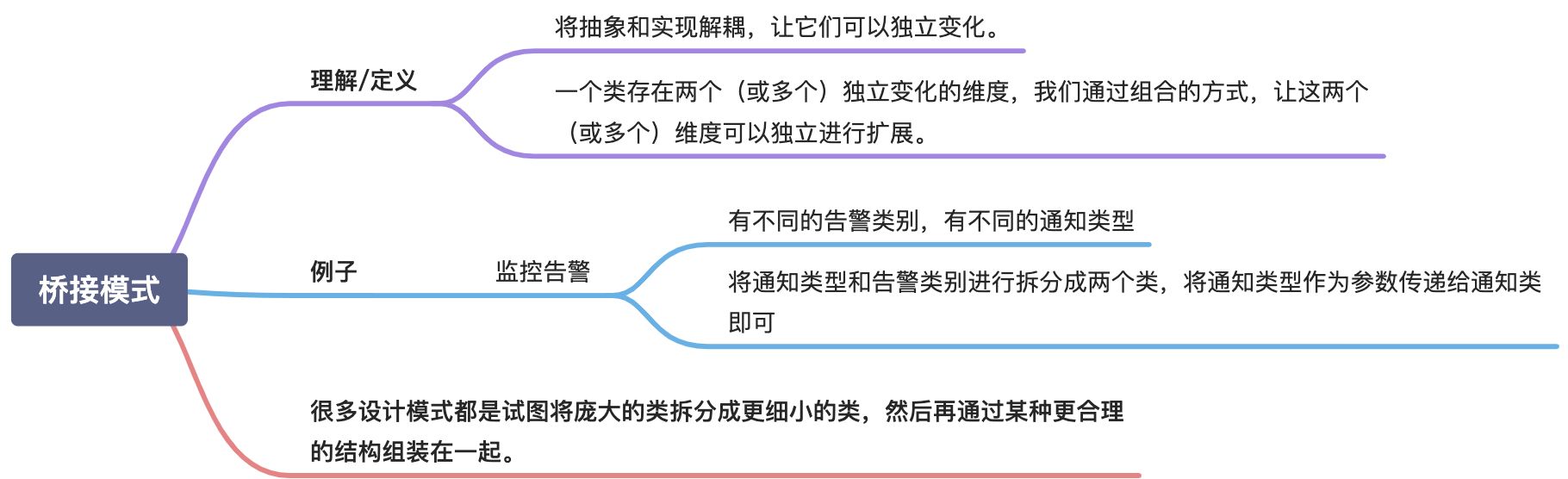
代码实现
Code
1
2
3
4
5
6
7
8
9
10
11
12
13
14
15
16
17
18
19
20
21
22
23
24
25
26
27
28
29
30
31
32
33
34
35
36
37
38
39
40
41
42
43
44
| package bridge// IMsgSender IMsgSender
type IMsgSender interface {
Send(msg string) error
} // EmailMsgSender 发送邮件
// 可能还有 电话、短信等各种实现
type EmailMsgSender struct {
emails []string
} // NewEmailMsgSender NewEmailMsgSender
func NewEmailMsgSender(emails []string) *EmailMsgSender {
return &EmailMsgSender{emails: emails}
} // Send Send
func (s *EmailMsgSender) Send(msg string) error {
// 这里去发送消息
return nil
} // INotification 通知接口
type INotification interface {
Notify(msg string) error
} // ErrorNotification 错误通知
// 后面可能还有 warning 各种级别
type ErrorNotification struct {
sender IMsgSender
} // NewErrorNotification NewErrorNotification
func NewErrorNotification(sender IMsgSender) *ErrorNotification {
return &ErrorNotification{sender: sender}
} // Notify 发送通知
func (n *ErrorNotification) Notify(msg string) error {
return n.sender.Send(msg)
}
|
单元测试
1
2
3
4
5
6
7
| func TestErrorNotification_Notify(t *testing.T) {
sender := NewEmailMsgSender([]string{"test@test.com"})
n := NewErrorNotification(sender)
err := n.Notify("test msg") assert.Nil(t, err)
}
|
关注我获取更新
猜你喜欢