参数问题
现象
背八股文的时候温习了一下防抖和节流的概念。于是自己随手把网上的版本试了一下,发现不行:
<body>
  <button id="debounce">防抖测试</button>
  <script>
    function debounce(fn, delay) {
      let timer = null;
      return function () {
        clearTimeout(timer);
        timer = setTimeout(() => {
          fn.apply(this)
        }, delay)
      }
    }
    document.querySelector("#debounce").addEventListener("click", debounce((ev) => {
      console.log(ev)
    }, 500))
  </script>
</body>
控制台会打印 undefined。
结论
setTimeout 里我们的函数执行的时候,没有参数。所以应该改为:
timer = setTimeout(() => {
          fn.apply(this,arguments)
}, delay)
所以里面的 apply 可以通俗的理解为就是为了传参数进去用的。
但为什么这样就可以呢?为啥arguments 就对了呢?
箭头函数
试验1
setTimeout 里面用的是箭头函数,那我们用普通函数会发生什么?
timer = setTimeout(function () {
          fn.apply(this,arguments)
}, delay)
控制台会打印:
undefined
试验2
我们修改一下代码:
function debounce(fn, delay) {
      let timer = null;
      return function () {
        console.log(this,arguments);
        setTimeout(function () {
          console.log(this,arguments);
        },delay)
        setTimeout(()=>{
          console.log(this,arguments);
        },delay)
      }
    }
控制台会输出:
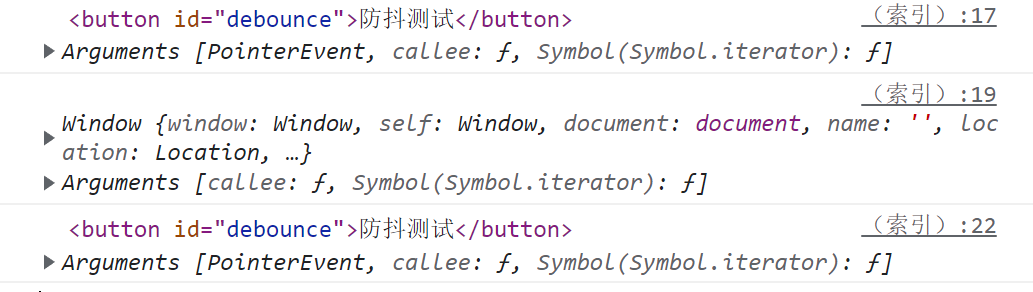
分析
从两个试验可以看出,箭头函数会把内部的 this 和 arguments 绑定为与定义时的上层一致。
而上一层就是我们的事件监听器直接调用的函数,所以这时候的 arguments 和 this 都是正确的。
知识点
- 作为普通函数执行时,
this指向window。如果是事件监听,就是触发事件的对象。 - 当函数作为对象的方法被调用时,
this就会指向该对象。 - 构造器调用,
this指向返回的这个对象。 - 箭头函数的
this绑定看的是this所在函数定义在哪个对象下,就绑定哪个对象。如果有嵌套的情况,则this绑定到最近的一层对象上。 - 基于
Function.prototype上的apply、call和bind调用模式,这三个方法都可以显示的指定调用函数的this指向。apply接收参数的是数组,call接受参数列表,bind方法通过传入一个对象,返回一个this绑定了传入对象的新函数。这个函数的this指向除了使用new时会被改变,其他情况下都不会改变。若为空默认是指向全局对象window。